
JEV Mind × Frontier orchestration
Castle in Bloom
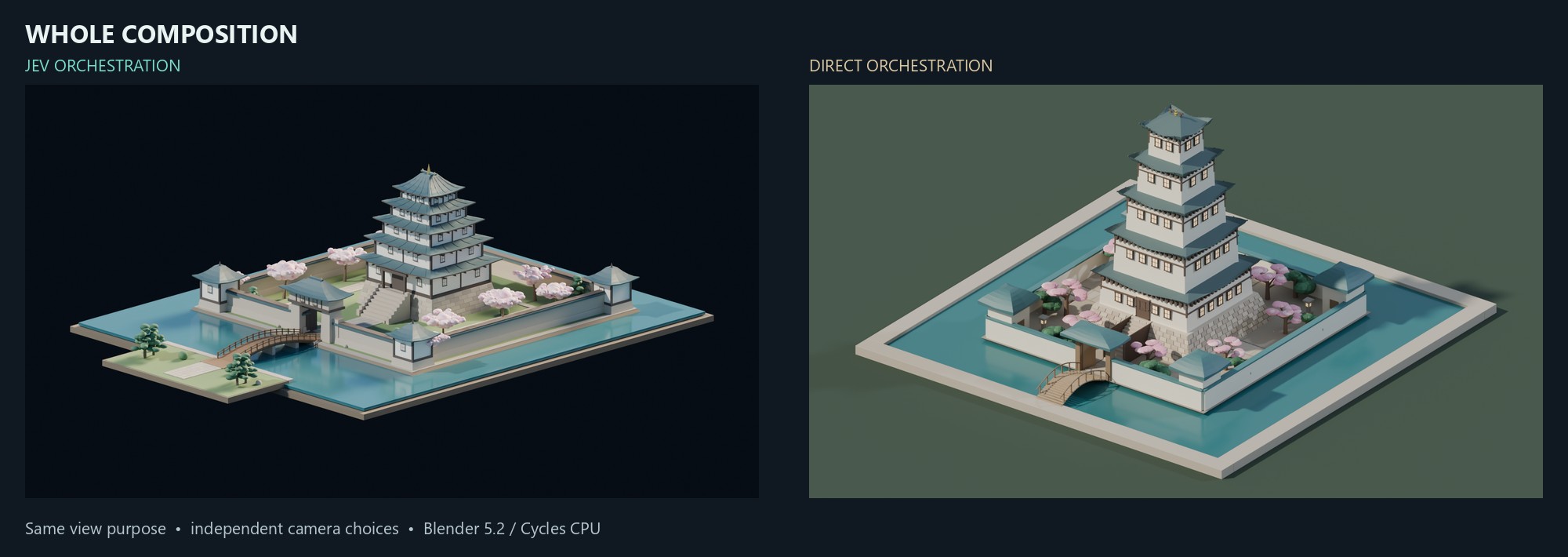
The same Japanese-castle brief became two independent Blender scenes: one with bounded JEV decisions through a persistent Frontier-authored Mind, and one with Frontier directly selecting work and repair briefs.
One brief, two workflows
Different orchestration. Distinct designs.
SGT Flash authored both products in Blender 5.2. Frontier wrote and revised the JEV Mind, diagnosed failures and supervised QA. The scenes share a specification and final render profile, but their budgets and correction histories differ.
JEV selected bounded decisions. Frontier remained available for escalation, diagnosis, revision and acceptance.
Frontier directly chose work and repair briefs while SGT Flash authored the scene.
Five paired Blender views
See where each workflow led.
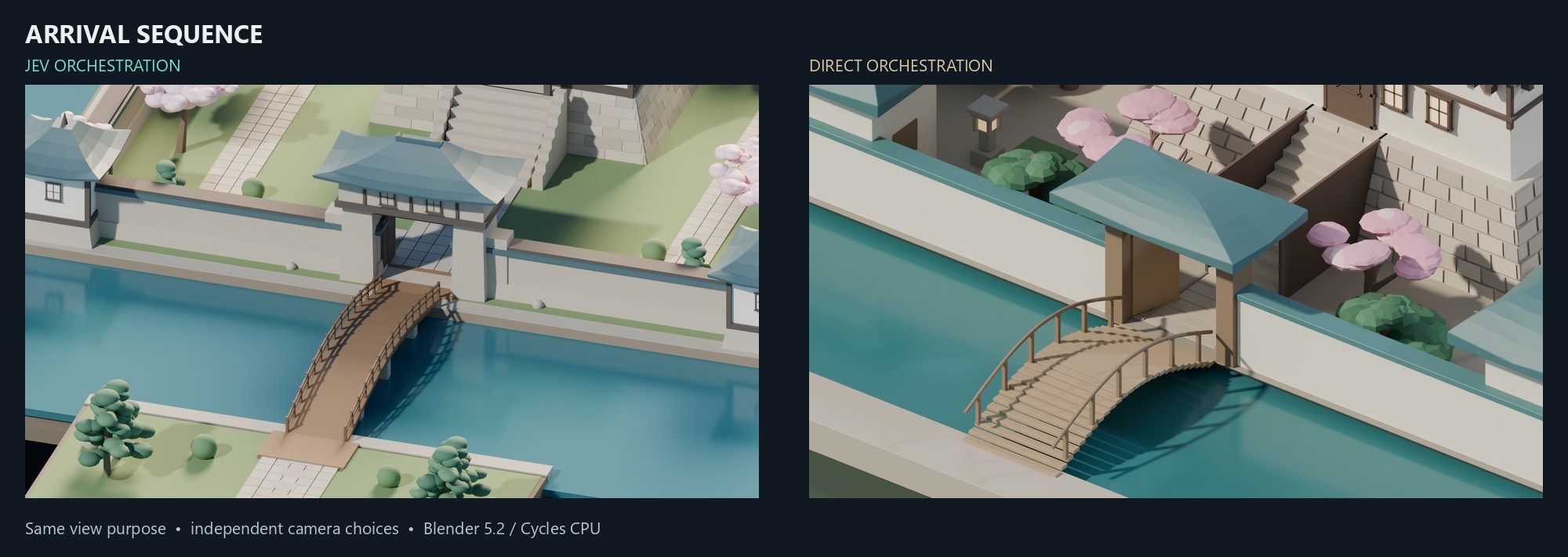
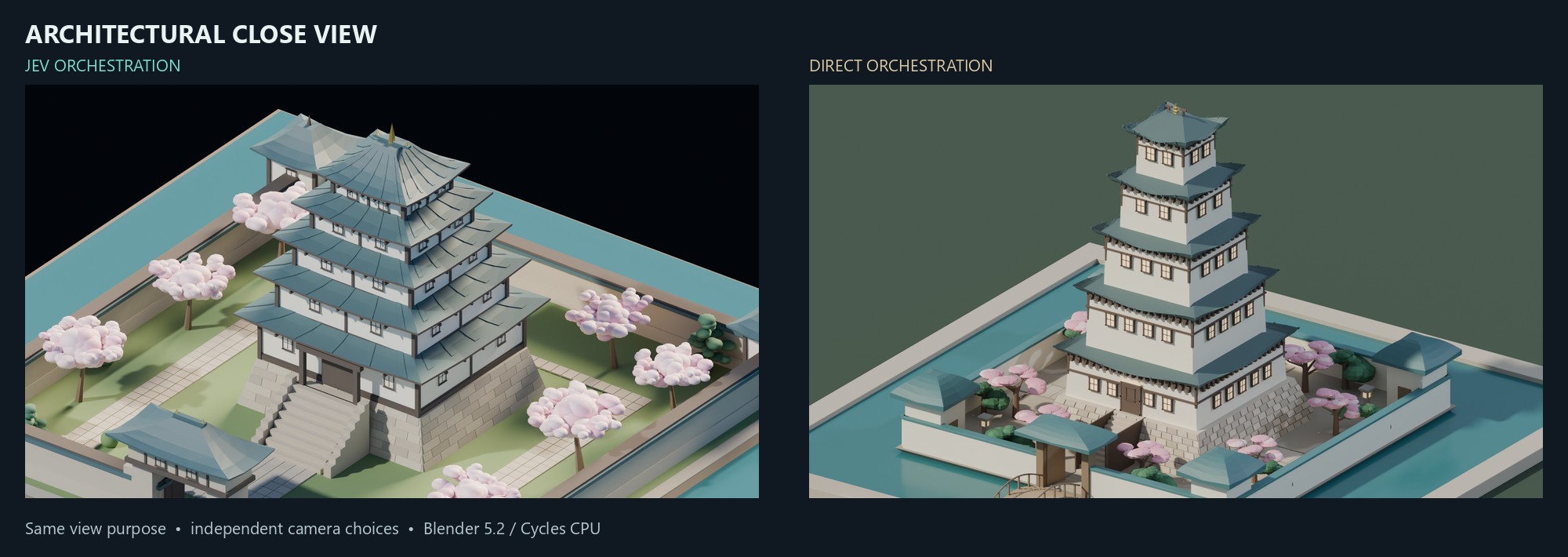
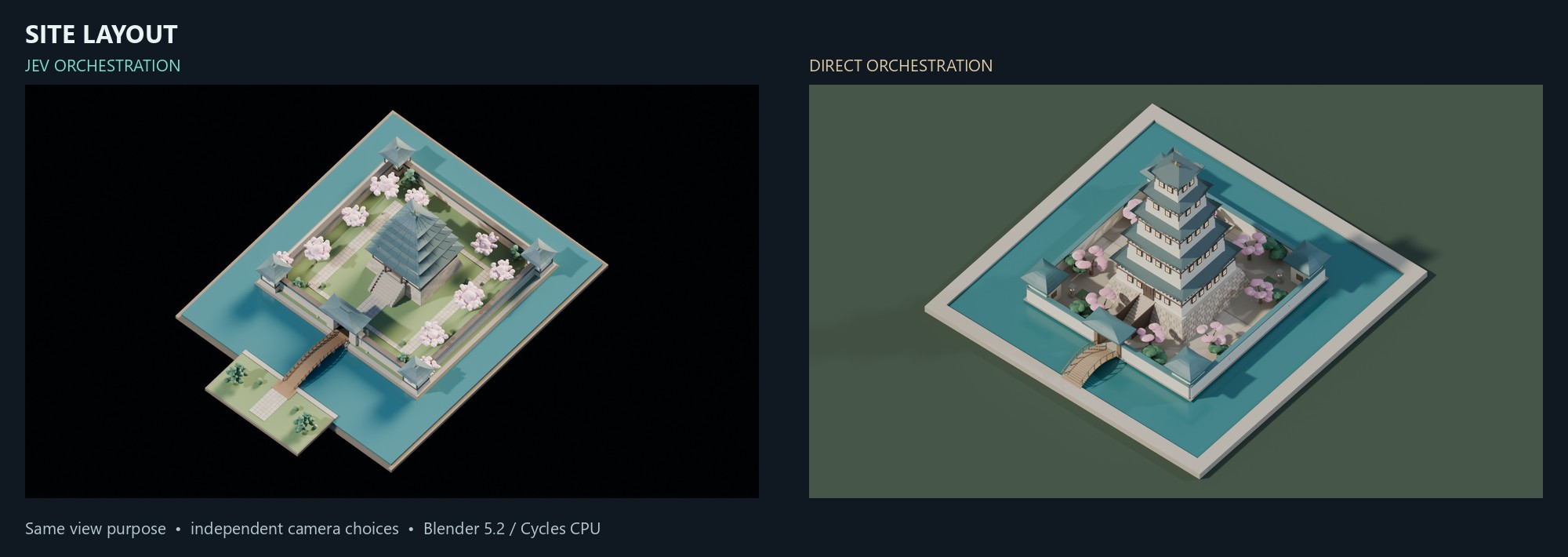
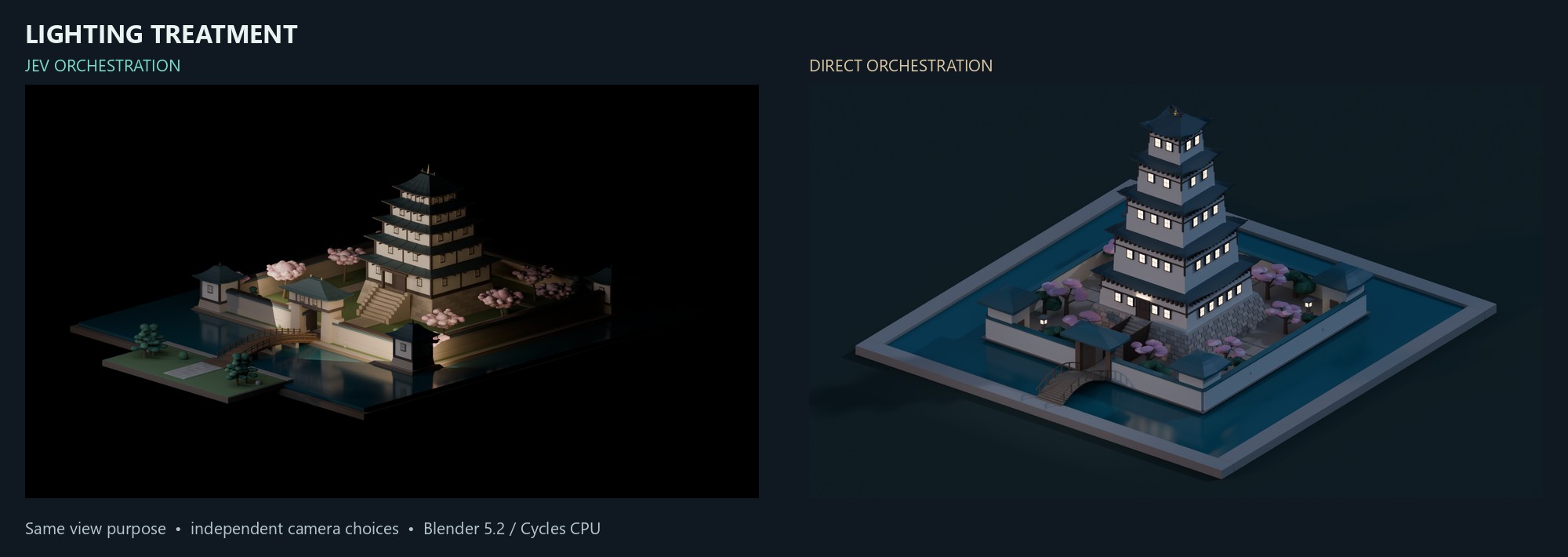
The JEV-assisted scene favors breadth, bridge length and an open garden. The direct scene favors a taller keep, finer facade rhythm and stronger dusk contrast.
What the comparison establishes
Visual evidence, stated precisely.
These five views establish two completed, editable visual outcomes. They do not establish a single overall quality winner or a 50% reduction in Frontier-model usage.
Comparable Frontier input and output totals were not retained, and the two workflows have unequal repair histories. A matched-budget trial would need the same stop criteria, Frontier totals, Mind-authoring effort, worker usage, wall time, revisions and accepted visual quality.
Both historical whole-assignment reports remain incomplete because their prospective decision logs contain gaps. The JEV packaged scene was reopened in Blender 5.2, re-rendered successfully and matched its frozen package images; all ten source images were visually inspected for the supplied briefing.